







Introduction
Unexpected flight diversions often lead to speculation, especially when an aircraft declares an emergency. The easyjet flight u2238 emergency landing newcastle incident attracted widespread attention after an easyJet flight travelling from Copenhagen to Manchester changed its route and landed safely at Newcastle International Airport.
Although many people initially suspected a technical issue, the diversion was made because a passenger onboard required urgent medical attention. The flight crew followed standard aviation safety procedures, allowing the passenger to receive medical care as quickly as possible while ensuring the safety of everyone on the aircraft.
What Happened on EasyJet Flight U2238?
The easyjet flight u2238 emergency landing newcastle incident occurred while the aircraft was operating its scheduled service from Copenhagen, Denmark, to Manchester, England.
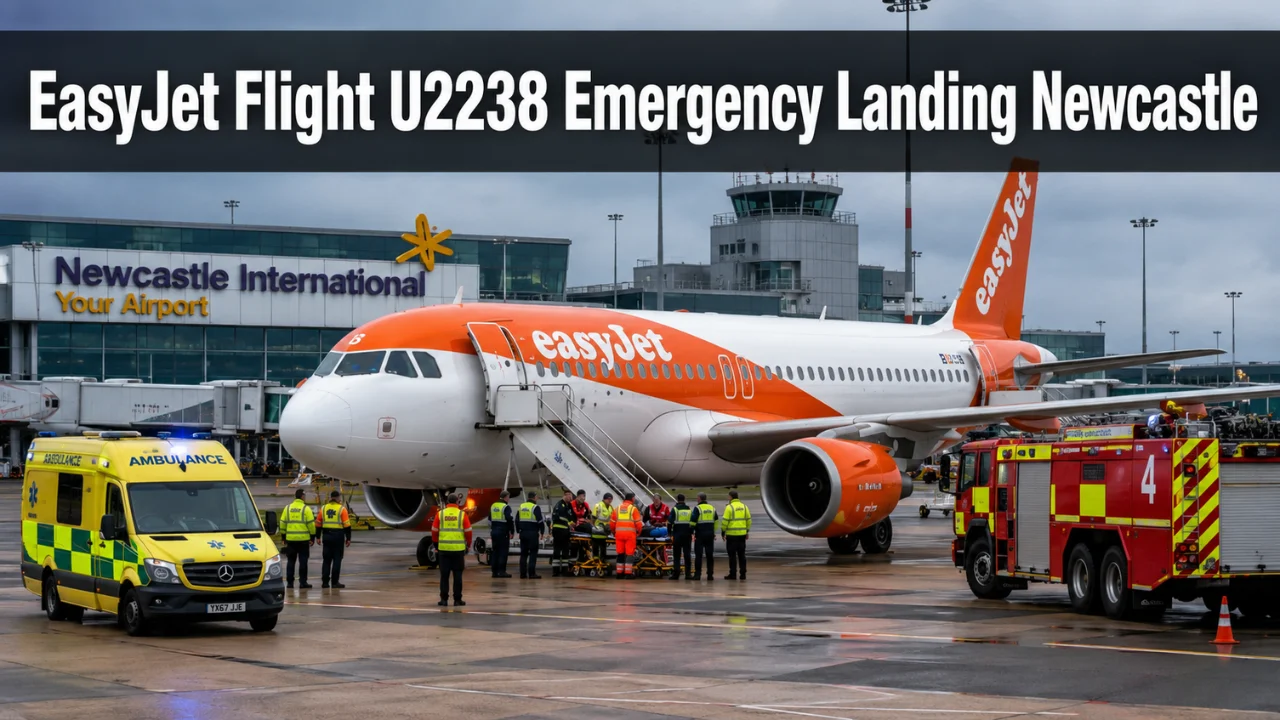
During the journey, a passenger experienced a medical emergency. After assessing the situation, the pilots decided that continuing to Manchester was not the safest option. Instead, they coordinated with air traffic control and diverted to Newcastle International Airport, where emergency medical teams were ready before the aircraft arrived.
The aircraft landed safely without any reported operational issues, and medical personnel immediately attended to the passenger.
Why Did the Flight Land in Newcastle?
A Medical Emergency Required Immediate Action
Commercial airlines are trained to respond quickly whenever a passenger suffers a serious medical problem during a flight. In situations where immediate treatment may be necessary, pilots choose the nearest suitable airport instead of continuing to the original destination.
Newcastle International Airport was selected because it offered:
- A suitable runway for the aircraft.
- Immediate access to emergency medical services.
- Safe weather and operating conditions.
- Efficient air traffic handling.
This decision reduced the time required for medical professionals to reach the passenger.
Was the Aircraft Experiencing Technical Problems?
One of the biggest questions following the diversion was whether the aircraft had developed a mechanical fault.
Available information indicates that the aircraft itself was operating normally. The diversion was carried out solely because of the passenger’s medical condition.
There were no reports of:
- Engine failure.
- Smoke inside the cabin.
- Hydraulic problems.
- Landing gear issues.
- Navigation system failures.
This means the emergency landing was precautionary and focused entirely on passenger welfare rather than aircraft performance.
EasyJet’s Official Response
Following the diversion, easyJet confirmed that the flight landed in Newcastle because a customer onboard required urgent medical assistance.
The airline thanked passengers for their patience and apologised for the delay caused by the unexpected diversion. It also reiterated that passenger safety and wellbeing remain the company’s highest priority.
Medical diversions are recognised procedures in commercial aviation and are handled according to international safety regulations.
What Happened After Landing?
Emergency Services Responded Immediately
Once the aircraft reached Newcastle International Airport, emergency medical personnel boarded shortly after arrival.
The affected passenger received immediate assessment and treatment before being transferred for further medical care if required.
Meanwhile, the remaining passengers stayed under the guidance of the airline while arrangements were made for the continuation of their journey to Manchester.
No injuries involving other passengers or crew members were reported.
How Airlines Handle Medical Emergencies During a Flight
Every commercial airline prepares its cabin crew and flight deck for situations involving onboard medical emergencies.
Cabin crew receive training in:
- Basic first aid.
- Cardiopulmonary resuscitation (CPR).
- Using emergency medical kits.
- Operating automated external defibrillators (AEDs).
- Coordinating with medical professionals when available onboard.
Pilots remain in communication with air traffic controllers and, when necessary, airline medical support teams to determine whether diverting the aircraft is the safest course of action.
Why Emergency Diversions Are Sometimes Necessary
An emergency diversion does not automatically mean an aircraft has developed a serious fault.
Flights may divert because of:
- Passenger medical emergencies.
- Crew medical emergencies.
- Severe weather.
- Bird strikes.
- Smoke or unusual odours.
- Security concerns.
- Technical inspections that require immediate attention.
Passenger medical emergencies are among the most common reasons for an unscheduled landing.
The easyjet flight u2238 emergency landing newcastle event is an example of how airlines prioritise health and safety whenever circumstances change during a flight.
Why This Incident Received So Much Attention
Flight tracking services and aviation enthusiasts often notice aircraft that suddenly change course or declare an emergency.
When the easyJet aircraft diverted from its planned route, many people followed the flight online and searched for updates. Initial speculation centred on the possibility of a mechanical problem, but later information confirmed that the diversion was made because of a passenger requiring urgent medical care.
The safe outcome helped reassure passengers that the diversion was a precaution taken to protect someone’s health rather than a response to an aircraft malfunction.
Safety Procedures That Protect Passengers
Commercial aviation has strict safety systems designed to deal with unexpected situations.
Whenever a medical emergency occurs onboard, several organisations work together, including:
- The flight crew.
- Cabin crew.
- Air traffic control.
- Airport emergency services.
- Local medical teams.
This coordinated response helps ensure passengers receive assistance as quickly as possible while maintaining the safe operation of the flight.
The easyjet flight u2238 emergency landing newcastle incident demonstrates how these procedures are implemented in real-life situations.
Timeline of the Incident
Departure
The aircraft departed from Copenhagen on its scheduled flight to Manchester.
Medical Emergency
A passenger became unwell during the journey and required urgent medical attention.
Diversion Decision
The pilots decided to divert to Newcastle International Airport after assessing the situation.
Safe Landing
The aircraft landed safely, where emergency responders were already waiting.
Medical Assistance
Medical personnel treated the affected passenger, while the airline arranged for the remaining passengers to continue their journey.
Final Thoughts
The easyjet flight u2238 emergency landing newcastle incident highlights how airlines respond when a passenger requires immediate medical care during a flight. Although emergency diversions can appear alarming, they are often precautionary decisions made to protect lives.
In this case, the aircraft landed safely, emergency services responded promptly, and there were no reports of operational issues affecting the aircraft itself. The coordinated efforts of the pilots, cabin crew, air traffic controllers, airport staff, and medical teams ensured the situation was handled efficiently from beginning to end.
FAQs
1. What caused the easyjet flight u2238 emergency landing newcastle incident?
The flight diverted to Newcastle because a passenger onboard required urgent medical attention.
2. Was there a technical fault with the aircraft?
No. Available information indicates the aircraft was operating normally, and the diversion was related to a passenger medical emergency.
3. Where was the flight travelling before the diversion?
The flight was operating from Copenhagen, Denmark, to Manchester, England.
4. Why was Newcastle International Airport selected?
Newcastle was the nearest suitable airport with the facilities and emergency medical services needed to assist the passenger quickly.
5. Were the passengers and crew safe after landing?
Yes. The aircraft landed safely, emergency teams attended to the affected passenger, and no injuries involving other passengers or crew members were reported.
Read More: Pxless: Complete Guide to Flexible, Responsive and Scalable Web Design