









Introduction
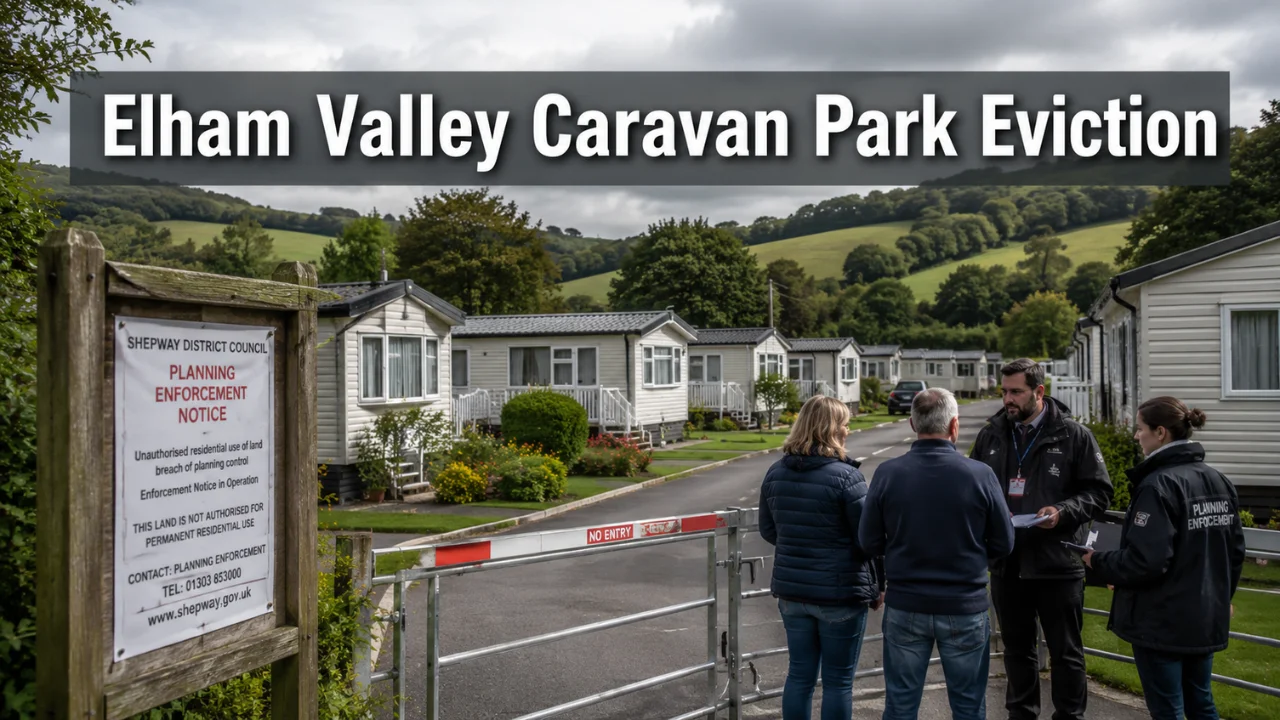
The elham valley caravan park eviction became a widely discussed planning matter because it involved questions about how a holiday caravan park was being used and whether that use complied with local planning regulations. Unlike many property disputes that focus on ownership, this case centered on planning permission, licensing requirements, and the distinction between holiday accommodation and permanent residential occupation.
Holiday parks across England operate under planning conditions that determine how caravans and camping facilities may be used. These conditions help local authorities manage development while protecting local communities and ensuring that sites operate within approved guidelines. When concerns arise about changes in land use, planning authorities have a legal responsibility to investigate and, where necessary, take enforcement action.
Understanding the elham valley caravan park eviction requires looking at the planning history of the site, the reasons behind enforcement action, the planning appeal process, and the wider impact on residents, site operators, and the surrounding community.
Background of Elham Valley Caravan Park
Elham Valley Caravan Park, also referenced in planning records as Goldpark Leisure Caravan and Camping Site, is situated in the Kent countryside. The park has long operated as a destination for holidaymakers seeking caravan and camping accommodation in a peaceful rural environment.
Like other holiday parks, the site operates under planning permissions granted by the local authority. These permissions specify the type of accommodation that may be provided, how the land can be used, and the conditions that must be followed throughout the operation of the park.
Planning permissions are not simply administrative documents. They establish legal boundaries that help distinguish between temporary holiday accommodation and permanent residential living. Any significant change in how a site is used may require additional planning approval before it can lawfully continue.
How the Planning Dispute Began
The events surrounding the elham valley caravan park eviction developed after concerns were raised about residential occupation within the holiday park.
Planning authorities investigated whether some caravans were being occupied as permanent homes instead of being used solely for holiday purposes. This distinction is important because holiday parks are normally approved for short-term recreational stays rather than year-round residential occupation.
Following investigations, planning officers concluded that residential use had taken place beyond the permissions granted for the site. This finding led to further planning reviews and formal consideration by the local authority.
The dispute was therefore based on planning compliance rather than ownership of the land itself.
Understanding Holiday Caravan Use and Residential Occupation
Holiday Accommodation
Holiday caravan parks are designed to provide temporary accommodation for visitors. Guests typically stay for holidays, weekends, or seasonal breaks before returning to their permanent homes elsewhere.
Planning permissions often include occupancy conditions that restrict permanent residence while allowing recreational use throughout approved periods.
Permanent Residential Use
Permanent residential occupation is treated differently under planning law. A caravan that serves as someone’s main home generally requires planning permission that specifically allows residential use.
Changing a holiday caravan park into a residential site without obtaining the appropriate approvals may lead to planning enforcement by the local authority.
The circumstances surrounding the elham valley caravan park eviction demonstrate why these distinctions are carefully regulated.
Planning Applications and Council Decisions
As questions regarding residential occupation emerged, several planning matters were considered by the local planning authority.
Applications seeking permission for residential use were reviewed against local planning policies and national planning guidance. During this process, planning officers assessed how the proposed use would affect the surrounding countryside, local planning objectives, and the long-term management of the site.
After reviewing the available evidence, planning permission for permanent residential occupation was not granted. Appeals and related applications seeking recognition of residential use were also unsuccessful.
These decisions confirmed that the approved planning status of the site remained that of a holiday caravan park rather than a permanent residential development.
What Is a Planning Enforcement Notice?
A planning enforcement notice is one of the main legal tools available to local authorities when they believe planning rules have been breached.
Rather than taking immediate action, the notice explains what planning breach has been identified, outlines the steps required to resolve the matter, and provides a compliance period during which those responsible can take corrective action.
In the case of the elham valley caravan park eviction, enforcement action focused on ending unauthorized residential occupation and restoring the site to its approved planning use.
Failure to comply with an enforcement notice may lead to further legal proceedings, making it an important stage within the planning system.
The Planning Appeal Process
Planning law allows applicants to challenge decisions through an independent appeal process.
Appeals provide an opportunity for planning decisions to be reviewed using evidence, planning policies, and legal principles. This process helps ensure fairness while maintaining confidence in the planning system.
During the planning history connected with the elham valley caravan park eviction, appeals were submitted in an effort to overturn earlier planning decisions. However, the appeals did not change the planning status of the site, and the original decisions remained in force.
Community Concerns During the Case
Planning matters involving caravan parks often attract public interest because they can affect both local residents and visitors.
Throughout the planning process, attention focused on several important issues, including:
- Compliance with approved planning permissions.
- Protection of the rural landscape.
- Future management of the holiday park.
- Consistency in planning enforcement.
- Long-term use of caravan accommodation.
These concerns reflected the wider role of planning authorities in balancing private development with the interests of the surrounding community.
Impact on Residents and Site Operators
The elham valley caravan park eviction had implications for multiple groups connected with the site.
Residents occupying caravans as permanent homes faced uncertainty regarding future accommodation arrangements. Planning enforcement can require individuals to relocate when occupation does not comply with approved planning permissions.
For site operators, planning disputes often involve legal advice, planning consultants, licensing reviews, and operational changes aimed at ensuring compliance with local planning requirements.
Although planning enforcement can be challenging, it is intended to uphold planning law consistently while allowing appropriate legal procedures to take place.
Why Planning Compliance Matters
Planning permission helps local authorities manage land use in a fair and sustainable way.
For caravan parks, compliance offers several benefits:
Protecting Local Planning Policies
Approved planning conditions ensure developments remain consistent with wider planning strategies for the surrounding area.
Supporting Responsible Site Management
Operators who follow planning permissions reduce the likelihood of legal disputes and enforcement action.
Providing Greater Certainty
Residents and holiday visitors benefit from understanding exactly how accommodation may lawfully be used before making long-term commitments.
Key Lessons from the Elham Valley Caravan Park Eviction
Several practical lessons can be drawn from this planning case.
First, holiday accommodation and permanent residential accommodation are subject to different planning rules, and these differences should never be overlooked.
Second, obtaining the correct planning permission before changing the use of a site is essential for avoiding future legal complications.
Third, planning enforcement is designed to ensure fairness across all developments by applying planning policies consistently.
Finally, caravan park operators, residents, and prospective buyers should always understand the planning status of a site before making significant decisions regarding long-term occupation.
Conclusion
The elham valley caravan park eviction illustrates the importance of planning compliance within the operation of holiday caravan parks. The case developed through planning investigations, consideration of residential occupation, planning applications, appeals, and formal enforcement procedures carried out by the local authority.
While planning disputes can be complex, they demonstrate why approved planning permissions remain an essential part of responsible land management. Holiday parks, residential developments, and caravan sites each operate under different planning frameworks, making compliance an important responsibility for both site owners and occupants.
As a result, the elham valley caravan park eviction continues to serve as an informative example of how planning law is applied when questions arise about the permitted use of caravan parks and holiday accommodation.
Frequently Asked Questions
1. Why did the elham valley caravan park eviction become a planning issue?
The matter arose because local planning authorities investigated whether parts of the holiday park were being used for permanent residential occupation instead of approved holiday accommodation.
2. What is the difference between a holiday caravan park and a residential caravan site?
A holiday caravan park is intended for temporary recreational stays, while a residential caravan site requires planning permission that specifically allows permanent occupation.
3. What is a planning enforcement notice?
A planning enforcement notice is a formal legal document issued by a local authority requiring a planning breach to be corrected within a specified period.
4. Were planning appeals involved in this case?
Yes. Planning-related appeals were submitted during the dispute, but the planning decisions remained unchanged after the appeal process.
5. What can caravan park operators learn from this case?
Operators should ensure that their sites operate within approved planning permissions, understand licensing requirements, and obtain the necessary approvals before changing how a site is used.
Read More: Bikesly: Complete Guide to Smart Cycling, Bike Reviews, Maintenance & Riding Tips