







Introduction
The m20 kent vehicle bridge closure became a major talking point after a serious incident forced authorities to shut part of one of Kent’s busiest motorways. The M20 is a vital route connecting London with the Port of Dover and the Channel Tunnel, making it essential for commuters, holidaymakers, and freight operators. When a section of this motorway closes unexpectedly, the effects are felt far beyond the immediate area.
Emergency services acted quickly to secure the scene, assist those involved, and protect other road users. While the closure caused long queues and travel delays, it also highlighted the importance of strict safety procedures whenever a major road incident occurs. Understanding why the motorway was closed and how authorities managed the situation helps drivers prepare for similar events in the future.
What Caused the m20 kent vehicle bridge closure?
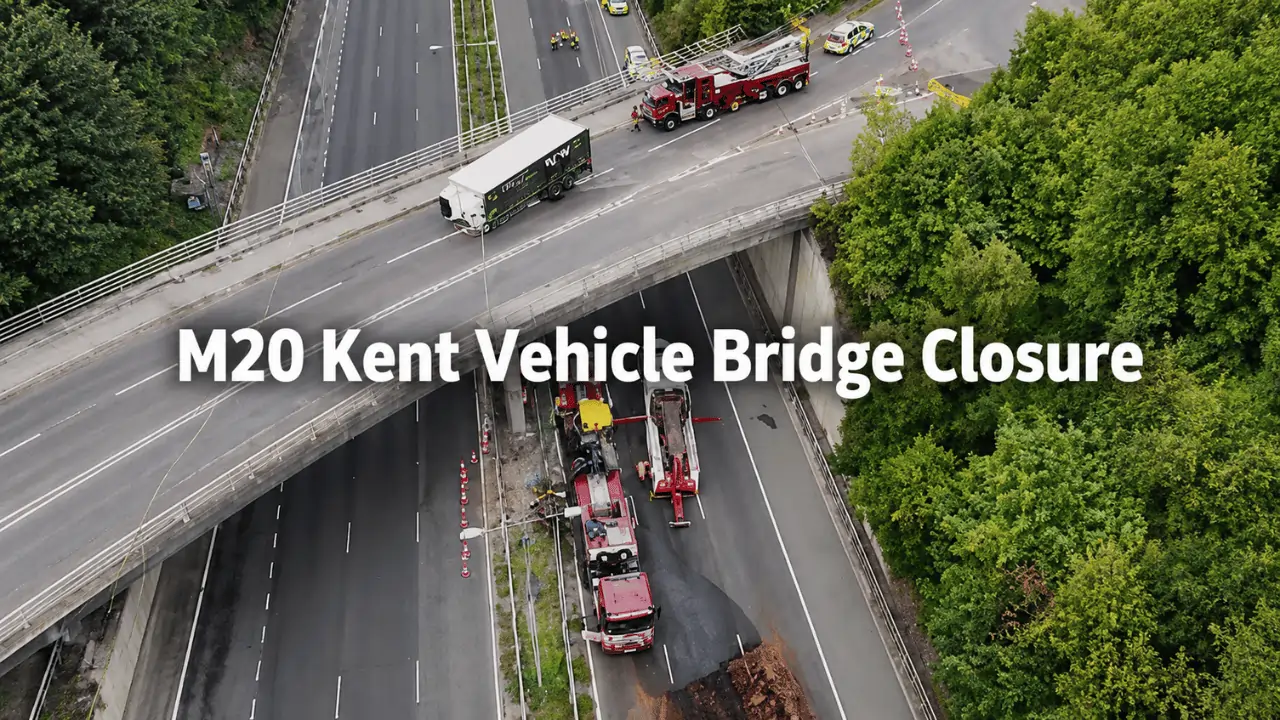
The m20 kent vehicle bridge closure followed a serious incident involving a vehicle on an overbridge crossing the motorway. Following the collision, the vehicle fell onto the carriageway below, creating an immediate danger for traffic travelling in both directions.
Because of the risks posed by the damaged vehicle, possible debris, and the condition of the bridge, emergency services ordered the immediate closure of the affected section of the motorway. This decision allowed rescue teams and highway engineers to work safely while preventing additional accidents.
Although motorway closures often cause frustration for motorists, they are necessary whenever public safety could be compromised.
Why Emergency Services Closed the Motorway
Closing a motorway is never a decision taken lightly. In this case, authorities needed unrestricted access to the scene to carry out several important tasks.
Rescue Operations
Medical teams attended to injured individuals while firefighters helped secure the damaged vehicles. Ambulance crews provided emergency treatment before casualties were transported for further care.
Vehicle Recovery
Recovering a heavily damaged vehicle from a motorway requires specialist lifting equipment. The recovery process can take several hours depending on the severity of the incident and the location of the vehicle.
Safety Inspections
Before traffic could safely return, engineers inspected both the motorway and the bridge above for signs of structural damage. Even small cracks or damaged barriers require careful examination before reopening the road.
Areas Affected by the Closure
The m20 kent vehicle bridge closure disrupted traffic across nearby junctions, with congestion quickly spreading to surrounding roads.
Drivers travelling toward Dover experienced significant delays, while motorists heading toward London also faced slow-moving traffic as diversions were introduced. Local roads became busier as vehicles left the motorway in search of alternative routes.
Because the M20 is one of the main transport corridors in southeast England, even a relatively short closure can affect traffic across a wide area.
How Diversion Routes Helped Manage Traffic
Traffic management teams introduced official diversion routes to reduce congestion and keep vehicles moving.
Depending on the location of the closure, motorists were directed onto roads including:
- A20
- A2
- M2
- Other signed local diversion routes
Following official road signs was the safest option because temporary traffic arrangements were updated as conditions changed throughout the incident.
The Importance of Bridge Safety Inspections
Whenever an incident involves a bridge, structural inspections become a top priority.
Checking the Bridge Structure
Engineers inspect:
- Concrete supports
- Steel beams
- Expansion joints
- Bridge barriers
- Road surface integrity
These inspections help determine whether the bridge can safely support normal traffic once the motorway reopens.
Examining the Motorway Below
The carriageway itself must also be inspected for:
- Surface damage
- Oil or fuel spills
- Debris
- Damaged crash barriers
- Drainage blockages
Repair work is completed before traffic is allowed back onto the motorway.
How the Closure Affected Drivers
The m20 kent vehicle bridge closure created delays for thousands of motorists throughout the day.
Commuters travelling to work faced extended journey times, while freight operators transporting goods to the Port of Dover experienced scheduling disruptions. Holiday traffic heading toward ferry terminals and the Channel Tunnel also encountered lengthy queues.
Businesses that depend on reliable transport schedules can be significantly affected when one of the country’s busiest motorways is temporarily closed.
Operation Brock and Why It Is Different
Many motorists associate M20 traffic problems with Operation Brock, but it is important to understand the difference.
Operation Brock is a traffic management system designed to handle heavy freight traffic during periods of disruption at Dover and the Channel Tunnel. It creates dedicated traffic arrangements to keep both freight vehicles and general traffic moving.
The m20 kent vehicle bridge closure, however, resulted from an emergency incident rather than planned traffic management measures.
Why Motorway Closures Sometimes Last Longer Than Expected
Many drivers expect roads to reopen as soon as damaged vehicles are removed, but several essential steps must be completed first.
Collision Investigation
Police investigate the circumstances of the incident by collecting evidence, examining vehicle positions, and documenting damage.
Cleaning the Road
Specialist teams remove debris, glass, damaged vehicle parts, and hazardous fluids that could create risks for other motorists.
Repairing Safety Features
Crash barriers, bridge fencing, road markings, and protective equipment are repaired or replaced if damaged during the incident.
Only after every safety check has been completed can authorities reopen the motorway.
Safety Tips for Drivers During Major Motorway Closures
Unexpected road closures can happen at any time. Drivers can reduce stress and improve safety by following a few practical steps.
Before Starting Your Journey
- Check traffic conditions before leaving.
- Allow additional travel time.
- Carry enough fuel for possible delays.
- Keep a fully charged mobile phone.
While Approaching a Closure
- Follow official diversion signs.
- Reduce speed near emergency vehicles.
- Stay in your lane unless directed otherwise.
- Avoid unnecessary overtaking in congested traffic.
- Remain patient while recovery work is underway.
Following these simple precautions helps protect both motorists and emergency workers.
How Authorities Reopen the Motorway
Reopening a motorway requires coordination between multiple agencies.
Before traffic is allowed through, officials confirm that:
- Rescue operations are complete.
- Vehicles have been recovered.
- The bridge has passed structural inspections.
- Road repairs have been completed.
- All debris has been removed.
- Safety barriers meet required standards.
Only after every inspection has been successfully completed is the motorway reopened to normal traffic.
Why the m20 kent vehicle bridge closure Matters
The m20 kent vehicle bridge closure demonstrated how quickly a serious incident can disrupt one of England’s most important transport routes. While delays were unavoidable, the temporary closure allowed emergency responders, engineers, and highway crews to carry out their work safely.
Incidents of this nature also remind motorists why safety procedures exist. Every inspection, diversion, and temporary closure plays an important role in preventing further accidents and ensuring that drivers can return to the road with confidence once the motorway is declared safe.
Conclusion
The m20 kent vehicle bridge closure was more than a temporary traffic disruption. It highlighted the importance of rapid emergency response, careful bridge inspections, organised traffic management, and coordinated recovery operations. Although motorists experienced delays and diversions, these measures were necessary to protect lives and restore safe travel conditions.
Drivers using the M20 can benefit from checking traffic updates before travelling, following official diversion routes during emergencies, and allowing extra time whenever major incidents occur. Staying informed and remaining patient during motorway closures helps make the road safer for everyone.
Frequently Asked Questions
1. What caused the m20 kent vehicle bridge closure?
The closure followed a serious incident involving a vehicle on an overbridge, leading emergency services to close the motorway while rescue operations, investigations, and safety inspections were carried out.
2. Why did authorities keep the motorway closed after the vehicle was removed?
Officials needed additional time to inspect the bridge, repair damaged barriers, clean the roadway, investigate the collision, and ensure the motorway was safe before reopening.
3. Which drivers were most affected by the closure?
Commuters, freight operators, holiday travellers heading to Dover, and businesses relying on the M20 experienced the greatest disruption due to delays and diversion routes.
4. Is Operation Brock the same as the m20 kent vehicle bridge closure?
No. Operation Brock is a planned traffic management system used during freight congestion, while the m20 kent vehicle bridge closure resulted from an emergency incident requiring immediate road closure.
5. What should motorists do during a major motorway closure?
Drivers should follow official diversion signs, check live traffic information before travelling, allow extra journey time, stay alert around emergency services, and avoid unnecessary lane changes in heavy traffic.
Read More: Watchnewmovienet com: Complete Guide to Its Purpose, Content, Safety, and Legal Information