








Introduction
Commercial flights follow carefully planned routes every day, but unexpected situations can require an immediate change of course. The u28304 emergency landing paris incident gained attention after an easyJet flight traveling from Milan to London declared an emergency while flying over France. Although emergency declarations often raise concerns about aircraft safety, available reports showed that this diversion was linked to a passenger medical emergency rather than a technical problem with the aircraft.
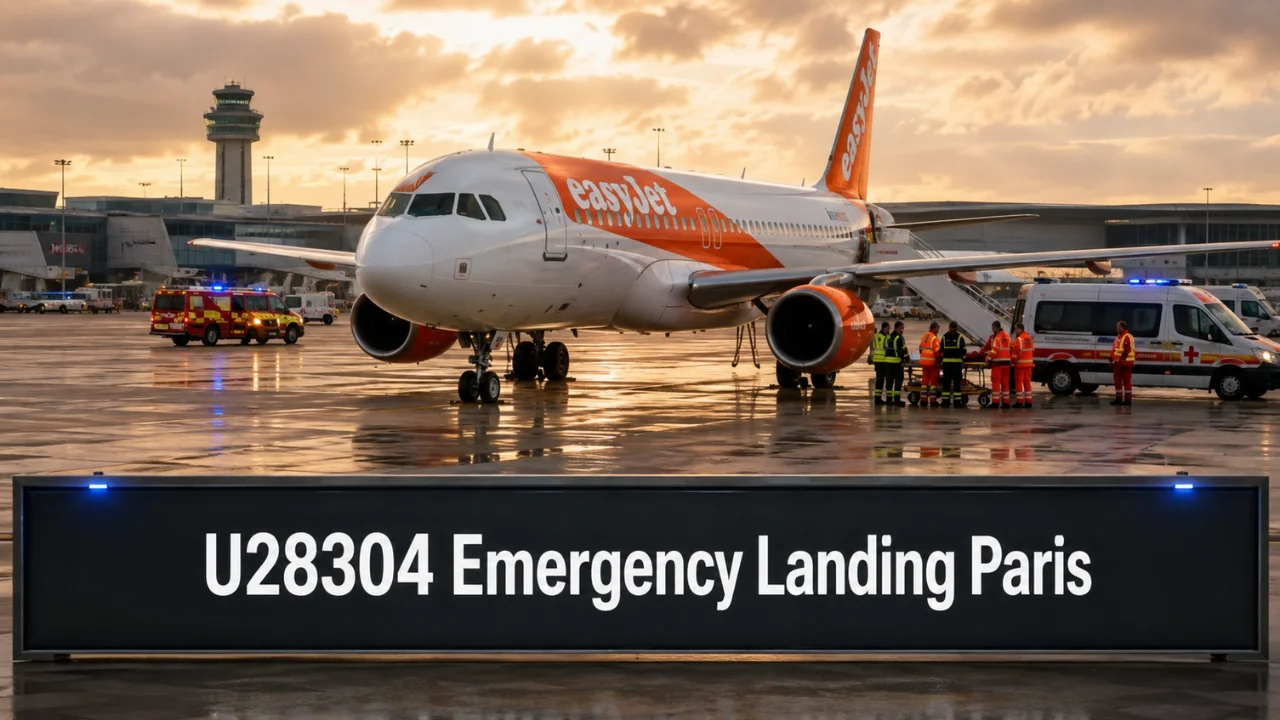
The crew followed established aviation procedures, coordinated with air traffic control, and diverted to Paris Charles de Gaulle Airport so medical personnel could assist as quickly as possible. The aircraft landed safely, demonstrating how commercial airlines prioritize passenger safety whenever an unexpected situation develops.
Flight U28304 Overview
Flight U28304 was an easyJet service operating from Milan Malpensa Airport in Italy to London Gatwick Airport in the United Kingdom.
The aircraft assigned to the route was an Airbus A320-214, one of the most commonly used aircraft for European short and medium-haul flights. The journey began normally, with the aircraft departing on schedule and climbing to its planned cruising altitude.
Nothing unusual was reported during departure or the initial stages of the flight. The situation changed only after the aircraft was well into its journey over French airspace.
What Happened During the Flight?
Emergency Declared While Cruising
After reaching approximately 38,000 feet, the crew became aware of a serious medical situation involving a passenger onboard. The condition required urgent attention that could not wait until the aircraft reached London.
To ensure the passenger received medical care as quickly as possible, the pilots declared an emergency and requested priority handling from air traffic control. The decision led directly to the u28304 emergency landing paris, with Paris Charles de Gaulle Airport selected as the diversion airport.
The aircraft remained fully controllable throughout the flight, and there were no reports suggesting a loss of control or any abnormal flying characteristics.
Why Paris Was Chosen
When pilots decide to divert, they evaluate several important factors before selecting an airport. These include:
- Distance from the aircraft’s current position.
- Availability of emergency medical services.
- Runway length and airport facilities.
- Weather conditions.
- Air traffic management.
Paris Charles de Gaulle Airport met all these requirements, making it the safest and fastest option for handling the emergency.
Understanding the Cause of the Diversion
A Passenger Medical Emergency
The u28304 emergency landing paris was not caused by engine failure, hydraulic problems, smoke, or any structural issue with the Airbus A320.
Instead, available reports indicate that a passenger required urgent medical assistance. Medical emergencies are one of the leading reasons commercial aircraft divert from their scheduled routes.
For flight crews, protecting the health of passengers is always the highest priority. Even if the aircraft itself is operating perfectly, pilots will divert whenever immediate medical treatment is considered necessary.
What Does Squawk 7700 Mean?
During the incident, the aircraft transmitted Squawk 7700.
This four-digit transponder code is recognized worldwide as the standard emergency signal used by aircraft. When pilots select this code, air traffic controllers immediately understand that the aircraft requires priority assistance.
It is important to understand that Squawk 7700 does not identify the exact nature of the emergency. It can be used for medical situations, technical issues, smoke in the cabin, or other circumstances where the crew needs immediate support.
Once the emergency code is received, controllers provide the aircraft with priority routing and coordinate airport emergency services before landing.
Safe Arrival at Paris Charles de Gaulle Airport
Emergency Services Were Ready
Following the emergency declaration, the aircraft was given priority to approach Paris Charles de Gaulle Airport.
Emergency personnel prepared for the aircraft’s arrival while air traffic control ensured the flight experienced minimal delay during its approach.
The aircraft landed safely on Runway 26R without further complications.
Medical responders were able to reach the passenger immediately after landing, while airport ground teams completed the necessary operational procedures.
The smooth handling of the situation reflected the effectiveness of emergency coordination between pilots, controllers, airport staff, and medical professionals.
Was There a Technical Problem?
Based on the information available, there was no indication that the aircraft suffered a mechanical failure.
The Airbus A320 continued to operate normally throughout the diversion and landing.
Emergency landings are often misunderstood because the word “emergency” naturally attracts attention. In aviation, however, an emergency declaration simply allows the crew to receive priority support whenever passenger safety or wellbeing may be affected.
The u28304 emergency landing paris is an example of how an emergency declaration can be made even when the aircraft itself remains fully operational.
What Happens After an Emergency Landing?
Once an aircraft reaches the ground after declaring an emergency, airlines follow a structured process to ensure passenger safety and determine whether the flight can continue.
Medical Assessment
Medical professionals evaluate the passenger requiring assistance and provide treatment immediately.
Aircraft Inspection
Depending on the reason for the diversion, engineers may inspect the aircraft before approving further operations.
Operational Planning
The airline reviews fuel requirements, crew duty hours, weather conditions, and airport operations before deciding whether the aircraft will continue to its original destination.
Reports following the incident indicated that the airline expected the aircraft to resume its journey after completing the required procedures.
Why Airlines Divert Flights for Medical Emergencies
Medical diversions occur more often than many travelers realize.
Commercial aircraft carry passengers of different ages and health conditions, making unexpected illnesses possible during any flight.
Pilots receive extensive training to assess these situations while consulting medical support services when necessary.
Factors considered before diverting include:
Passenger Condition
The severity of the medical emergency is the most important consideration.
Distance to Destination
If reaching the destination would significantly delay treatment, a diversion becomes the safer choice.
Nearest Suitable Airport
Pilots choose airports capable of safely handling the aircraft while providing immediate medical assistance.
Airport Facilities
Large international airports offer emergency response teams, medical services, and operational support that make them ideal diversion points.
How Aviation Safety Procedures Protected Everyone Onboard
The response to the u28304 emergency landing paris followed internationally accepted aviation procedures from beginning to end.
The pilots quickly assessed the situation and informed air traffic control.
Controllers immediately provided priority routing toward Paris.
Emergency responders prepared before the aircraft arrived.
Medical teams were available immediately after landing.
Each part of the process was designed to reduce delays and ensure the passenger received the fastest possible care while maintaining the safety of everyone onboard.
Key Facts About the Incident
Flight Information
- Airline: easyJet
- Flight Number: U28304
- Route: Milan Malpensa to London Gatwick
- Aircraft: Airbus A320-214
Reason for Diversion
A passenger medical emergency required immediate medical assistance.
Diversion Airport
Paris Charles de Gaulle Airport.
Landing Outcome
The aircraft landed safely, emergency personnel responded promptly, and no reports indicated a mechanical problem with the aircraft.
Final Thoughts
The u28304 emergency landing paris demonstrates how modern aviation safety procedures work when an unexpected medical situation develops during a flight. Although hearing that an aircraft has declared an emergency can sound alarming, the decision was made to protect a passenger who required urgent medical attention.
The flight crew acted quickly, air traffic controllers provided priority handling, and emergency services were prepared before the aircraft touched down. The Airbus A320 completed a safe landing, showing how effective coordination between airlines and airport authorities helps manage unexpected situations without compromising safety.
Rather than indicating a failure of the aircraft, the incident serves as an example of the aviation industry’s commitment to protecting passengers whenever circumstances change during a journey.
Frequently Asked Questions
1. Why did the u28304 emergency landing paris happen?
The diversion occurred because a passenger experienced a medical emergency that required immediate treatment. The aircraft itself was not reported to have any mechanical problems.
2. Where was Flight U28304 traveling?
The easyJet flight was operating from Milan Malpensa Airport in Italy to London Gatwick Airport in the United Kingdom.
3. What does Squawk 7700 mean?
Squawk 7700 is the international emergency transponder code used by aircraft to notify air traffic control that immediate assistance and priority handling are required.
4. Did the aircraft land safely?
Yes. The aircraft landed safely at Paris Charles de Gaulle Airport, where emergency medical teams were already waiting to assist.
5. Did the flight continue after landing in Paris?
According to available reports, the airline expected the aircraft to continue its journey after completing the required operational procedures.
Read More: 03316304572: Unknown Caller Check, Safety Tips and Should You Call Back?